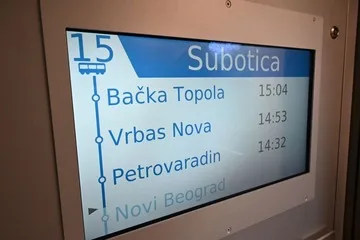
President of the Republic of Serbia, Aleksandar Vučić, announced on his official Facebook page the completion of the long-awaited high-speed railway to Subotica, highlighting that the new line effectively connects Serbia to the European rail network through Budapest. “I am very happy that we have completed the high-speed railway to Subotica. In this way, through Budapest, we are linking ourselves with the whole of Europe.
Srbija News – Tonight the freight service will start operating, and in five days — on Wednesday at noon — the regular passenger service will be launched. Everyone will be able to ride for free until Sunday, and after that, the return ticket will cost 2,000 dinars, which I consider to be very affordable. This railway line will greatly contribute to the development of our economy. I am proud of what we have built and grateful to our Chinese friends for their professional work and to the citizens of Serbia for their great trust,” said Vučić in his statement.
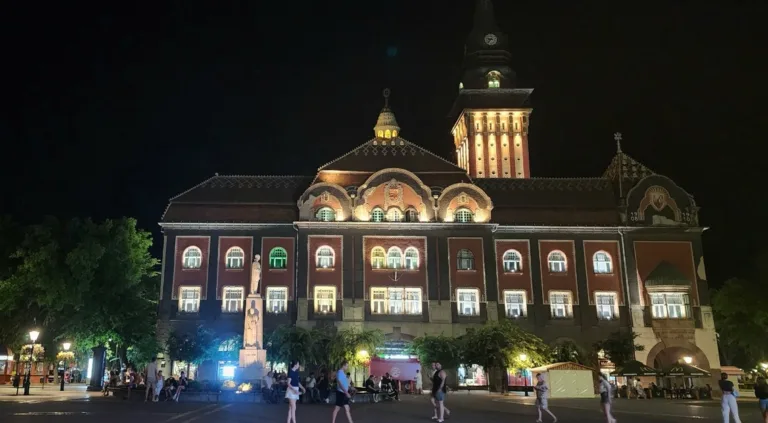
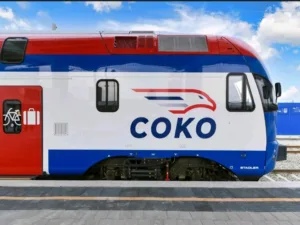
The opening of this modern line between Novi Sad and Subotica marks a historic milestone for Serbia’s transport infrastructure. The new 108-kilometer section is now fully integrated into the national and international rail corridor that will ultimately connect Belgrade with Budapest and, through Hungary, with the rest of Europe. The route includes several key stations: Novi Sad, Vrbas, Bačka Topola, and Subotica, each of which has been fully modernized to meet European standards of safety and comfort. Trains on the new line will reach speeds of up to 200 km/h, significantly reducing travel time and offering a new level of convenience for passengers. Once the full route from Belgrade to Subotica becomes operational, travel between the two cities is expected to take just over one hour — a revolutionary improvement for domestic transport.
The project, realized in cooperation with Chinese construction companies and Serbian partners, involved years of intensive work, complete electrification, reconstruction of stations, installation of modern signaling systems, and the construction of new bridges, underpasses, and viaducts. One of the most impressive structures is the 1.6-kilometer viaduct near Vrbas, symbolizing the technical achievements of this international project.
For residents and visitors alike, the new high-speed connection brings a completely new travel experience — fast, safe, and affordable. In the first few days after the official opening, passengers can enjoy free rides, after which a round-trip ticket will cost only 2,000 dinars, keeping the line accessible to everyone. From an economic standpoint, the railway is expected to strengthen Serbia’s logistics, trade, and tourism sectors by providing a faster transport link to Central Europe.
The Serbian news portal SrbijaNews.com, which closely followed the development of the project over the past several years, emphasized that the successful completion of this line is a major step in the modernization of the country’s infrastructure. The launch of the Novi Sad – Subotica section at the end of 2025 is seen as a symbolic and timely achievement — a long-awaited “gift” to the nation marking the end of an ambitious construction phase.
The next stage of the project aims to complete the Belgrade–Budapest high-speed corridor, with full operation expected by 2026. Once finished, travel between the two capitals will take less than three hours, turning Serbia into a key transport hub of the Balkans and linking it more closely with the European Union.
The completion of the Novi Sad – Subotica high-speed railway represents more than just a construction success — it is a national milestone that brings Serbia closer to Europe, accelerates economic development, and transforms the daily lives of its citizens. As President Vučić aptly described it, this is truly “the railway of the future” — a symbol of progress, connection, and a new era for Serbia’s place in modern Europe.